
Carolina Rig: Why It Always Works | JAEGER
Want to catch more fish and looking for a rig that always delivers? Many rigs fail in tough conditions, but not the Carolina Rig. The Carolina Rig is one of the most popular and most widely used rigs. That is no surprise, because it is relatively simple, very versatile, and easy to fish. With the Carolina Rig, you can get started without any extreme technical know-how. Now you’ll find out why the Carolina Rig is so successful and how to use it perfectly. Keep reading and make your next fishing trip unbeatable.
What is a Carolina Rig? (explained simply)
The Carolina Rig is a basic rig where the weight is separated from the bait. Between the bullet weight and the hook sits a leader, so your bait doesn’t hang directly from the weight but runs freely behind it.
That is exactly what makes the difference. While the weight keeps contact with the bottom, the bait moves independently and looks much more natural. This presentation is especially effective when fish are cautious or holding close to the bottom.
The rig is mainly used for fishing perch and zander, but it can basically be fished in almost any body of water. Its big advantage lies in the combination of easy handling and extremely realistic bait presentation.
Why does a Carolina Rig work?
The Carolina Rig is called an all-purpose weapon for good reason. The key lies in the sinking phase. Because the hook is connected to the swivel, your bait doesn’t sink steeply but glides slowly to the bottom. This slow fall perfectly imitates an injured or careless baitfish. For predators like perch or zander, that is extremely tempting.
Then there’s the natural presentation. The leader ensures that the bait runs a little away from the weight. That looks subtle and realistic, especially when fishing in clear water, a huge advantage.
The Carolina Rig is especially strong with inactive fish. On days when perch and zander are just sluggishly sitting on the bottom, you can still fool them with the rig. The slow and natural presentation also forces skeptical predators to bite.
It also has an incredibly good sound effect. The glass bead strikes the bullet weight when jigging or dragging and creates a soft clicking sound. That noise sparks the fish’s curiosity and makes your bait even more noticeable without sounding unnaturally loud.
✓ slow sinking
✓ natural bait presentation
✓ ideal for inactive predators
✓ extra attraction from the bead
When should I use a Carolina Rig?
The Carolina Rig shows its strengths especially in clear water. When fish are wary and won’t be tempted by aggressively worked rigs, the Carolina Rig often gets the decisive bite. The natural presentation looks subtle and convincing, making it perfect for cautious predators. It is unbeatable in cold water too. When perch and zander while fishing are sluggish on the bottom, you can still fool them with the Carolina Rig.

Best fishing rods for beginners – how to find the right one
Find out which fishing rod is really suitable for beginners – without expensive bad buys and hours of research.
➔ Best fishing rods for beginnersWhich is better, Carolina or Texas Rig?
The Carolina Rig shows its strengths in different situations than the Texas Rig. Here, a leader separates the bait from the weight. As a result, it sinks more slowly and, when dragging or jigging while perch fishing, is pulled gently over the bottom, for example. The movement looks extremely natural, almost weightless.
Especially when fishing cautious or inactive fish such as perch by season , that is a huge advantage. Imagine it’s winter and the perch are lying lazily on the bottom. Fast, hard movements are more likely to scare them off. With the Carolina Rig, you can still tempt them to bite because the bait looks like a slightly injured prey fish that barely moves.

The Texas Rig is your rig for aggressive fishing. You work the bait directly and quickly. Especially in heavily vegetated areas, among branches or weed beds, you can work with the Texas Rig very precisely. Since the bait sits directly behind the bullet weight, it can be maneuvered through obstacles more easily without the leader tangling.
Many bites come at short range here because predators like perch or zander attack the bait lightning fast. If fish are active and you want quick contact, the Texas Rig is hard to beat.
JAEGER tip: Always have both rigs with you. Switch depending on the season, the water, and fish activity. That way you stay flexible, can read any situation, and maximize your chances of landing fat perch or zander.
How do you fish with a Carolina Rig?
The Carolina Rig lives from its versatility. There are three presentation methods you need to know.
Jigging
Here you lift your rod slightly and let the bait sink again. The movements should not be hard jumps, but small hops along the bottom. This makes the bait look like a crayfish or small fish that startles briefly and then settles again. Perch in particular often respond to this behavior with hard bites.
Dragging
When dragging, you slowly pull the rig over the bottom. Simply raise the rod tip and guide it a bit to the side. Then lower it again, take up the slack, and start over. This lets your bait systematically probe the bottom. This method is ideal if you want to cover large areas without fishing too aggressively.
Pauses
Many bites come when you do nothing. After jigging or dragging, simply let the bait sit. Wait a few seconds. During that time, a skeptical fish may still strike because it thinks the prey is easy to grab. Especially in winter or with inactive fish, these pauses are often the key to success.
The Carolina Rig ingredients
✓ Bullet weight: The weight, usually between 7 and 20 g, provides casting distance and bottom contact.
✓ Glass bead: Sits between the bullet weight and swivel. When dragging or jigging, it creates a soft clicking sound – an underrated attractor.
✓ Swivel: Separates the main line from the fluorocarbon leader and prevents line twist.
✓ Fluorocarbon leader: Usually 40–80 cm long. It is unobtrusive in the water and provides abrasion resistance.
✓ Offset hook: For a weedless presentation of the bait. Especially important for crayfish imitations or creature baits.
✓ Bait: You can fish almost any softbait on the Carolina Rig. Crayfish, worms, or small rubber fish — anything that catches is allowed.

Carolina Rig shopping list
Normally, you would have to buy all the parts separately and tie your own Carolina Rig. That takes time and nerves, especially on the water.
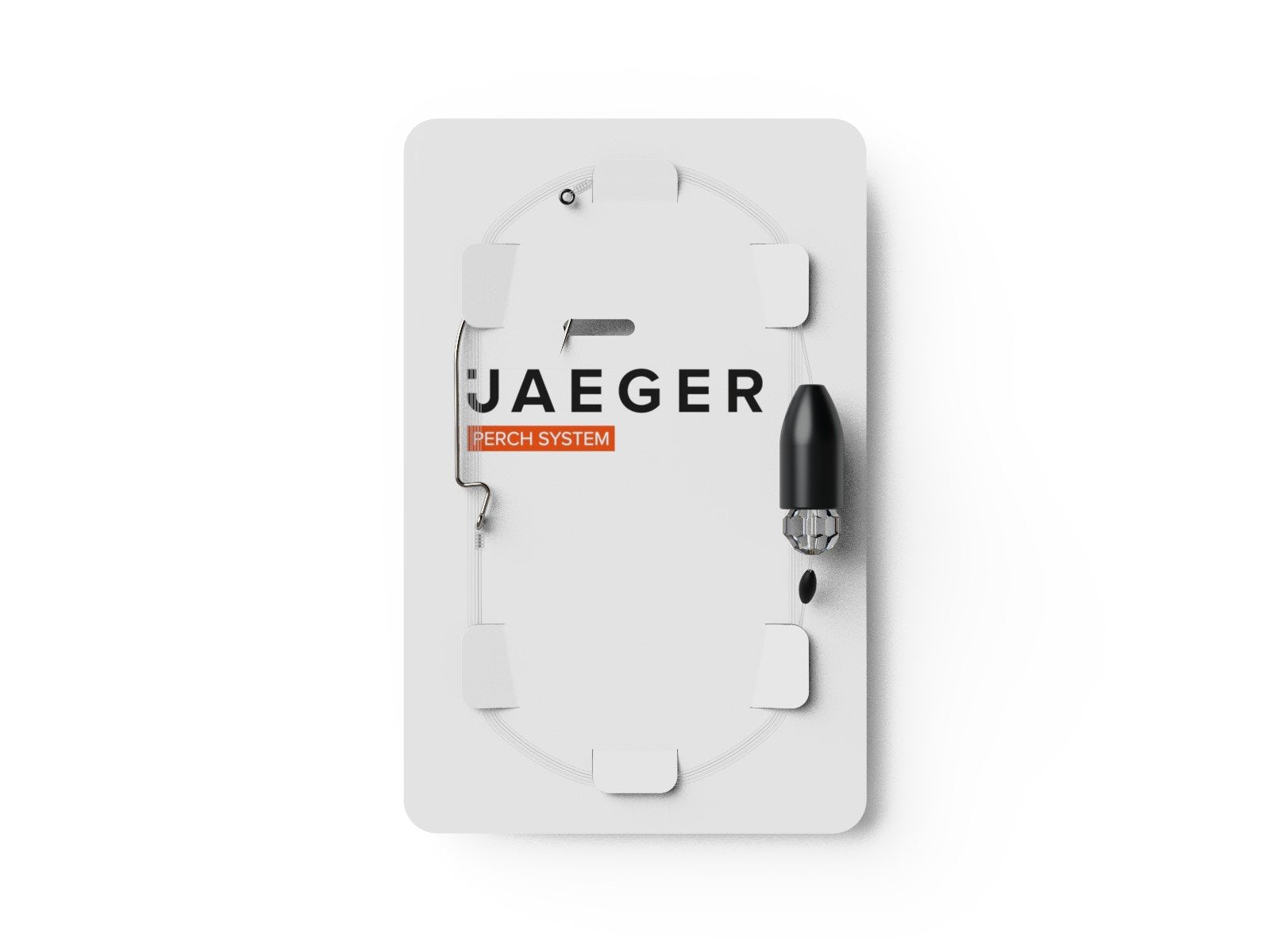
At JAEGER, you’ll find ready-made Carolina Rigs. Everything is perfectly matched and ready to use right away. No tying, no fiddling. Just unpack and fish.
➔ Discover the Carolina Rig in the JAEGER shop
Carolina Rig – flexible version
The classic Carolina Rig has a fixed setup. Bullet weight, glass bead, swivel, leader, hook. But there is a flexible version that many anglers underestimate.
In this version, the bead and bullet weight are freely movable. That means they slide directly on the main line without a stopper or fixed knot. Only the swivel at the end of the main line stops them. This creates two important effects.
More noise. Because the bead and bullet weight hit each other freely, they create a clearly audible clicking sound with every movement. This clicking additionally attracts fish, especially in murky water or when predators respond to acoustic stimuli.
More natural presentation. The free movement makes your bait move even more unpredictably. Every pull, every small twitch of the rod transfers to the bullet weight and bead, while the bait remains free to move naturally. For skeptical perch and zander, that is a convincing reason to strike.
Advantages of the Carolina Rig
Why do so many anglers swear by the Carolina Rig? It is one of the most successful methods out there. The rig works in almost any body of water, whether lake, river, or canal. It attracts predators even when other rigs fail.
Its big advantage lies in its versatility. You can fish it with almost any bait and work it in different ways. Whether you want to jig actively or drag it passively, the Carolina Rig delivers.
However, it is not the easiest rig to tie. Between bullet weight, glass bead, swivel, leader, and hook, it takes know-how and time before everything sits perfectly. That is exactly why you’ll find pre-tied Carolina Rigs at JAEGER. You save yourself the tying and can focus fully on fishing. Just unpack, rig up, and go.
✓ works in all waters
✓ catches even in difficult conditions
✓ versatile use
✓ ready tied at JAEGER – no effort
Carolina Rig bait
Which bait suits the Carolina Rig? The answer is simple: almost any of them. Crayfish are especially popular. They look extremely realistic on the rig because they crawl slowly along the bottom. Perch love this presentation and often strike without hesitation.
But other softbaits work perfectly too. Rubber fish, worms, or creature baits — you can let your creativity run free. The rig gives you the freedom to test different bait types and find out what the fish are responding to right now.
"Try different colours and sizes, especially in clear water or when the predators are picky."

The best perch baits – top comparison
Find the best baits for perch and increase your catch rate.
➔ Compare nowHere you’ll find an overview of the most effective baits that you can also fish on the Carolina Rig.
FAQ
When is the Carolina Rig better than the Drop Shot for perch fishing?
The Carolina Rig is the better choice when you want to efficiently cover large areas of water while perch fishing. Because of the free sinking phase, the bait moves especially naturally and specifically targets active perch. The Carolina Rig really shines in lakes with lots of structure or varying depths.
The Drop Shot Rig, on the other hand, is better for precise, vertical fishing at a constant depth. It is ideal when perch are more passive and you need to present the bait with pinpoint accuracy.
For classic lake perch fishing, the Carolina Rig is the more effective and versatile method in most situations.
Which baits are best for the Carolina Rig when perch fishing?
For the Carolina Rig when perch fishing, softbaits such as rubber worms, creature baits, or small crayfish imitations are especially suitable. These baits benefit particularly from the natural sinking phase and look extremely realistic underwater. In clear lakes, natural colours work especially well, while more eye-catching colours attract more attention in murky water.
In which waters does the Carolina Rig work best?
The Carolina Rig works especially well in lakes, gravel pits, and slowly flowing waters. Over sandy or gravelly bottoms, the rig plays to its strengths because the bait hovers freely above the bottom. It is also very effective along edges, plateaus, and transitions between shallow and deep water when perch fishing.
How do I fish the Carolina Rig correctly for perch?
When perch fishing, the Carolina Rig is slowly dragged along the bottom with short pauses in between. A calm, controlled presentation is important so the bait can develop its natural movement. It is especially effective to lightly twitch the rig and then let it sink again to tempt cautious perch into biting.
How long should the leader be on a Carolina Rig?
The optimal leader length for the Carolina Rig is usually between 40 and 80 cm. That gives you natural bait movement and enough distance from the weight without losing control.
Depending on the situation, you can adjust the length:
- Short (30–40 cm) → more control, more aggressive presentation, ideal for active fish
- Medium (40–60 cm) → standard for most situations
- Long (60–100 cm) → maximum natural action, perfect for cautious or inactive predators